

Not all stainless steel is created equal. Two valves can look identical, carry the same “304” or “316” label, and still perform completely differently in the field — because the actual nickel and chromium content of the raw material varied at the mill. For buyers of industrial valves and pipe fittings, this hidden variability is one of the biggest hidden risks in sourcing. This article explains why material traceability matters and how spectral analysis closes the gap between “probably stainless” and “verified stainless.”
The Problem with “Probabilistic” Quality
Stainless steel earns its corrosion resistance from a specific balance of alloying elements — primarily chromium (which forms a passive oxide layer) and nickel (which stabilizes the steel’s structure and improves resistance to acids and chlorides). When a supplier sources raw material without verifying composition batch by batch, the finished valve’s real-world performance becomes a matter of probability rather than certainty.
What Can Go Wrong Without Verification
- Chromium content below spec, leading to a weaker passive layer and faster rust formation
- Nickel content that doesn’t meet grade requirements, reducing resistance to chloride-induced pitting
- Inconsistent quality between production batches, even under the same product label
- Premature valve failure in the field, often after the warranty period has already expired
What Spectral Analysis Actually Checks
Spectral analysis (optical emission spectroscopy) identifies the precise elemental composition of a metal sample — chromium, nickel, molybdenum, carbon, and other alloying elements — typically within seconds. Testing raw material before it enters production allows a manufacturer to:
- Confirm grade conformance before any machining begins, rather than discovering a problem after a valve is finished
- Reject non-conforming batches at the source, preventing substandard material from reaching customers
- Maintain consistency across large production runs, so a batch shipped in January performs the same as one shipped in December
- Provide documentation that procurement and quality teams can reference for compliance records
Why This Matters for Different Stainless Steel Grades
304 Stainless Steel
The general-purpose workhorse grade, 304 needs verified chromium (typically around 18%) and nickel (around 8%) content to deliver the corrosion resistance buyers expect for standard water and mild chemical service.
316 Stainless Steel
316 adds molybdenum for improved resistance to chlorides and marine environments. Even small deviations in molybdenum content can noticeably reduce pitting resistance in coastal or offshore installations — making batch verification especially important for this grade.
2205 Duplex Stainless Steel
Duplex grades like 2205 rely on a precise balance between austenitic and ferritic microstructures to achieve their signature combination of strength and corrosion resistance. Composition control here is even more critical, since deviations can compromise both mechanical and corrosion properties simultaneously.
Beyond the Material: The Full Quality Chain
Verified raw material is only the first link in a reliable valve. A complete quality process typically includes:
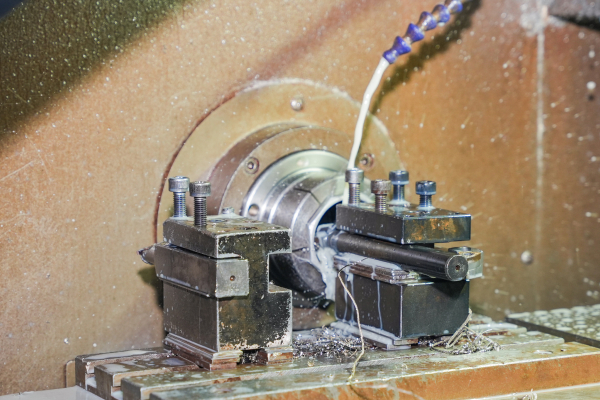
- Precision machining — CNC threading with go/no-go thread gauge inspection on every unit, so installation is a simple, leak-free “tighten and done” experience
- Pressure testing — every valve tested (commonly at 1.6 MPa) rather than relying on sample-based spot checks
- Sealing performance validation — testing under high-pressure and corrosive-media conditions to confirm the valve holds a reliable seal in demanding service, not just in ideal lab conditions
- Standards compliance — testing protocols aligned with recognized standards such as ISO 15848-1 for fugitive emissions and zero-leakage performance
What Buyers Should Ask Suppliers
When evaluating a valve or pipe fitting supplier, procurement teams and engineers should ask:
- Do you perform spectral analysis on incoming raw material batches, or only on finished products?
- Can you provide documentation of material composition for a specific order?
- Is every unit pressure-tested, or only a sample from each batch?
- What thread inspection process do you use, and how is it documented?
Final Thoughts
Corrosion resistance is not a label — it’s a measurable property that depends on precise material composition. Suppliers who verify chromium and nickel content through spectral analysis before production, and back that up with 100% pressure testing and thread inspection, are offering something meaningfully different from suppliers who simply trust the mill certificate. For projects where valve failure means costly downtime or safety risk, that difference is worth insisting on.